


Key Takeaways:
- There are different types of data analytics that influence architectural and technological solutions. They include descriptive, diagnostic, predictive, and prescriptive analytics.
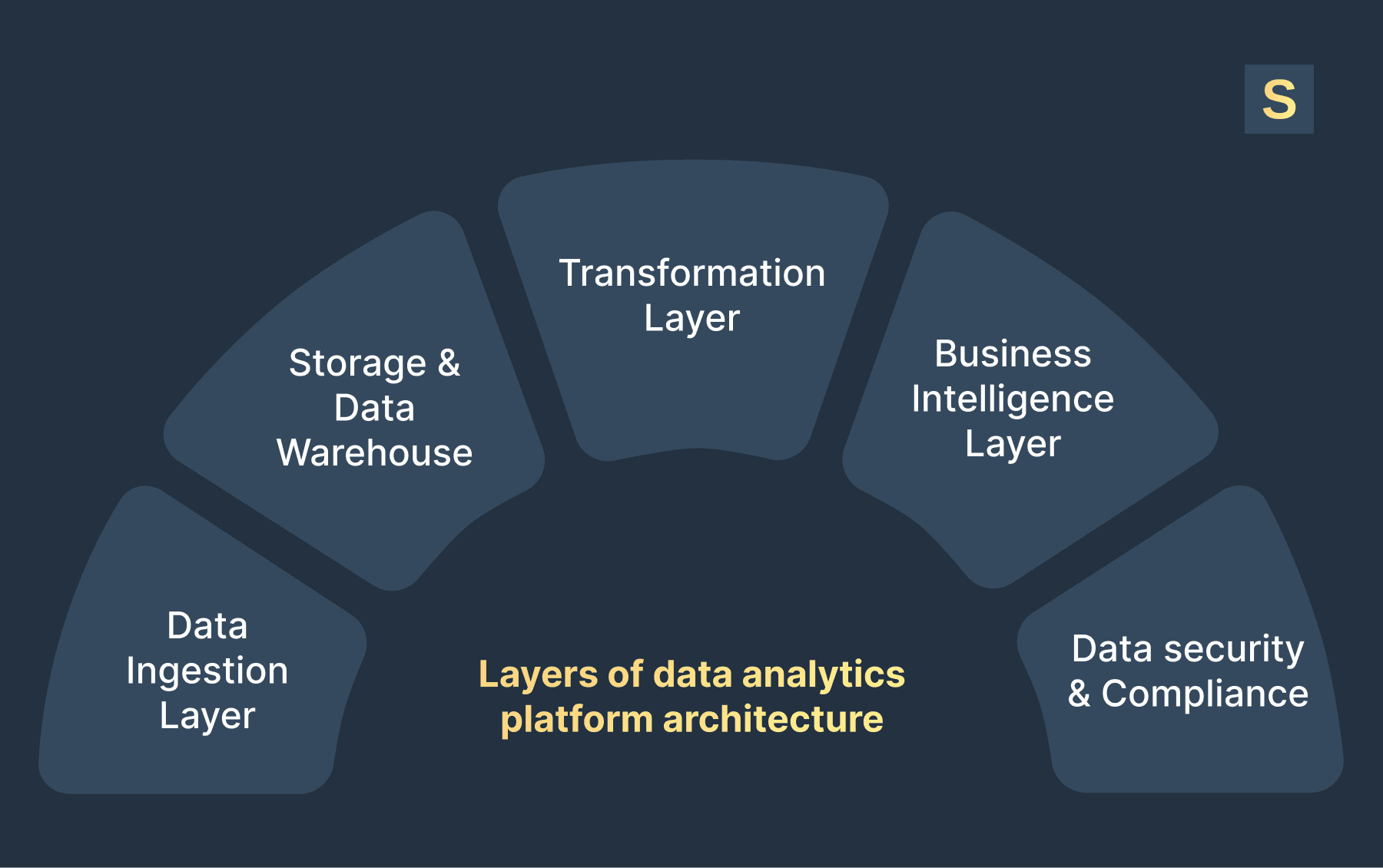
- Data analytics platform architecture consists of five layers and must be scalable, secure, and reliable to ensure that it can handle growing data volumes.
- Data modeling, transformation, and visualization are crucial components of an analytics platform, requiring expertise in both strong data engineering and business intelligence.
- Building a successful data analytics platform requires careful attention to data quality, transparency, security, scalability, and domain expertise.
Data has become one of the most powerful drivers of business success. However, managing data remains a significant challenge. Organizations require reliable analytical systems that can store, process, and interpret vast volumes of information. No wonder Analytics & Data Management SaaS led the industry in 2025.
Whether you are aiming to disrupt the financial sector or embarking on complex healthcare data analytics platform development, this guide will help you map out your project, including the tech stack and resources needed.
Types of Data Analytics Platforms
The analytics platform architecture depends heavily on the type of intelligence you intend to deliver. You typically decide across four levels of analytical maturity:
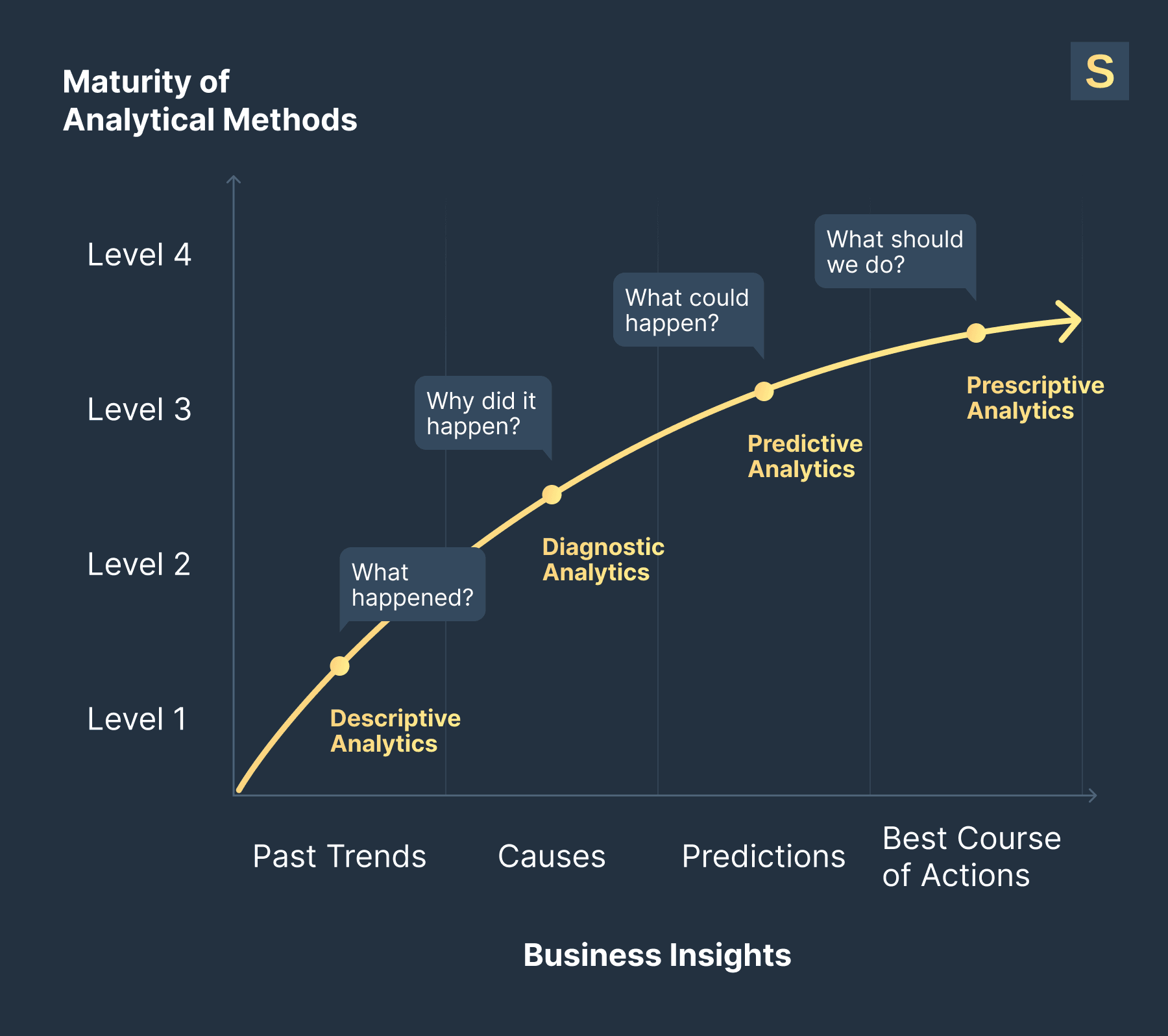
- Descriptive Analytics (The "What"). This type of platform helps you make sense of the historical data to give hindsight. For a startup, it could be monthly recurring revenue (MRR) dashboards or daily active user (DAU) reports.
- Diagnostic Analytics (The "Why"). This level needs more interactive features. It lets users look deeper into the data to find correlations. For instance, if churn increased last month, diagnostic analytics would help you identify the cause of that spike, whether it was a server outage or a pricing change.
- Predictive Analytics (The "What Next"). Here, statistical models and machine learning are used to identify future probabilities. For instance, in a healthcare data analytics platform, this could be the prediction of patient readmission rates based on past health records.
- Prescriptive Analytics (The "How"). As the most advanced option, it recommends the exact steps to take to get the desired outcomes. A logistics startup could use this to automatically re-route drivers in real-time to avoid traffic jams.
Pro Tip: The type of analytics you choose will greatly impact the cost and timeline of your project. Even though prescriptive analytics looks the most advanced, it doesn’t mean it meets the needs of every organization.
Always start by defining your business goals and selecting the analytics approach that delivers the right level of insight without adding unnecessary complexity.
Key Features for Data Analytics Platform Development
When you decide to develop a data analytics platform, prioritizing features that ensure long-term viability should be your focus.
Essential features include:
- Scalable data ingestion. The platform must be capable of handling data velocity, volume, and variety. It should be able to extract data from REST APIs, SQL databases, and even flat files (CSV/JSON) without manual intervention.
- Robust data governance & security. In data analytics platforms, it’s extremely important to have detailed control over who sees what. This includes Role-Based Access Control (RBAC), data lineage (tracking where data came from), and audit logging for compliance standards like GDPR, HIPAA, and SOC2.
- Data visualization. The objective of building analytics platform solutions is to make data accessible to users. Even users without a technical background should be able to filter, sort, and explore data through built-in dashboards.
- High-performance querying. Queries can become slower as data volume increases from gigabytes to terabytes. Your platform should have indexing, caching, and optimization features to support sub-second dashboard loading times.
- Extensibility. You need APIs and SDKs to integrate your analytics with third-party tools or custom applications without interruption.
The list above represents technical features that will help you build the right platform architecture. The actual feature list for your platform will differ based on your users’ requirements and preferences.
Pro Tip: Many modern analytics platforms allow multiple users to work on the same datasets, dashboards, and reports. Building such platforms is more complex, as it also involves advanced features like real-time data synchronization, conflict resolution, and scalable multi-user performance.
Read also: How to Build Real-Time Collaborative Applications: Best Practices
Data Analytics Platform Architecture
A well-built analytics platform architecture has five distinct layers, each of which performs a specific function.
1. Data Ingestion Layer
The first layer handles data integration. It extracts data from your operational systems, cleans, filters, and aggregates it to make it ready for analysis.
Previously, companies used custom scripts for ETL (Extract, Transform, Load). Today, the more efficient approach is ELT (Extract, Load, Transform), where data is first extracted and loaded into the warehouse in its raw form, and transformations are applied afterward as needed.
2. Storage Layer (Data Warehouse)
This layer performs numerous storage-related functions. It’s the center of your analytics platform architecture. Contrary to traditional databases (PostgreSQL/MySQL) that are optimized for writing transactions (OLTP), data warehouses are designed for reading and analyzing large datasets (OLAP).
3. Transformation Layer
The third layer is responsible for cleansing, normalizing, aggregating, and enriching the data. It converts data into structured formats suitable for analytics, either through ELT transformations in the warehouse or dedicated pipelines.
4. Business Intelligence Layer
This is the layer users actually interact with. It provides reporting, dashboards, visualization tools, self-service analytics, and KPI tracking to generate business insights. Some businesses integrate AI within this layer to provide advanced analytics functions.
5. Data Security and Compliance Layer
This part handles data encryption, access controls, user authentication, and other security mechanisms. Its main goal is to protect data from unauthorized access and mitigate data breaches. For example, data masking and anonymization help secure personally identifiable information (PII) and sensitive fields while enabling analytics on de-identified data.
The layer also incorporates regulatory compliance frameworks, ensuring that data storage, processing, and sharing adhere to legal and industry standards.
How to Build a Data Analytics Platform
Building data analytics platforms goes beyond coding. It combines data science, user experience, and robust infrastructure design. Let’s dive into the key stages of the analytics platform development process to see how it works in practice.
Step 1. Business Analysis
If you want to create a business that fosters an ROI-producing platform, you need to start by understanding the needs of your potential clients and transforming them into a product concept.
Business analysis will help you bridge the gap between business needs and technical implementation. At this stage, you’ll be able to identify data sources, data models, and analytics features, ensuring they provide meaningful insights for your end users.
As a result, you’ll start developing an analytics platform with a clear roadmap and optimized budgets.
Step 2: Architecture Design
When building a data analytics platform as a commercial product, standard internal architectures often fail. You aren't serving 10 internal analysts. You may serve 10,000 concurrent external users who expect subsecond load times. Your architecture needs to be designed for high concurrency, strict security, and efficiency at scale.
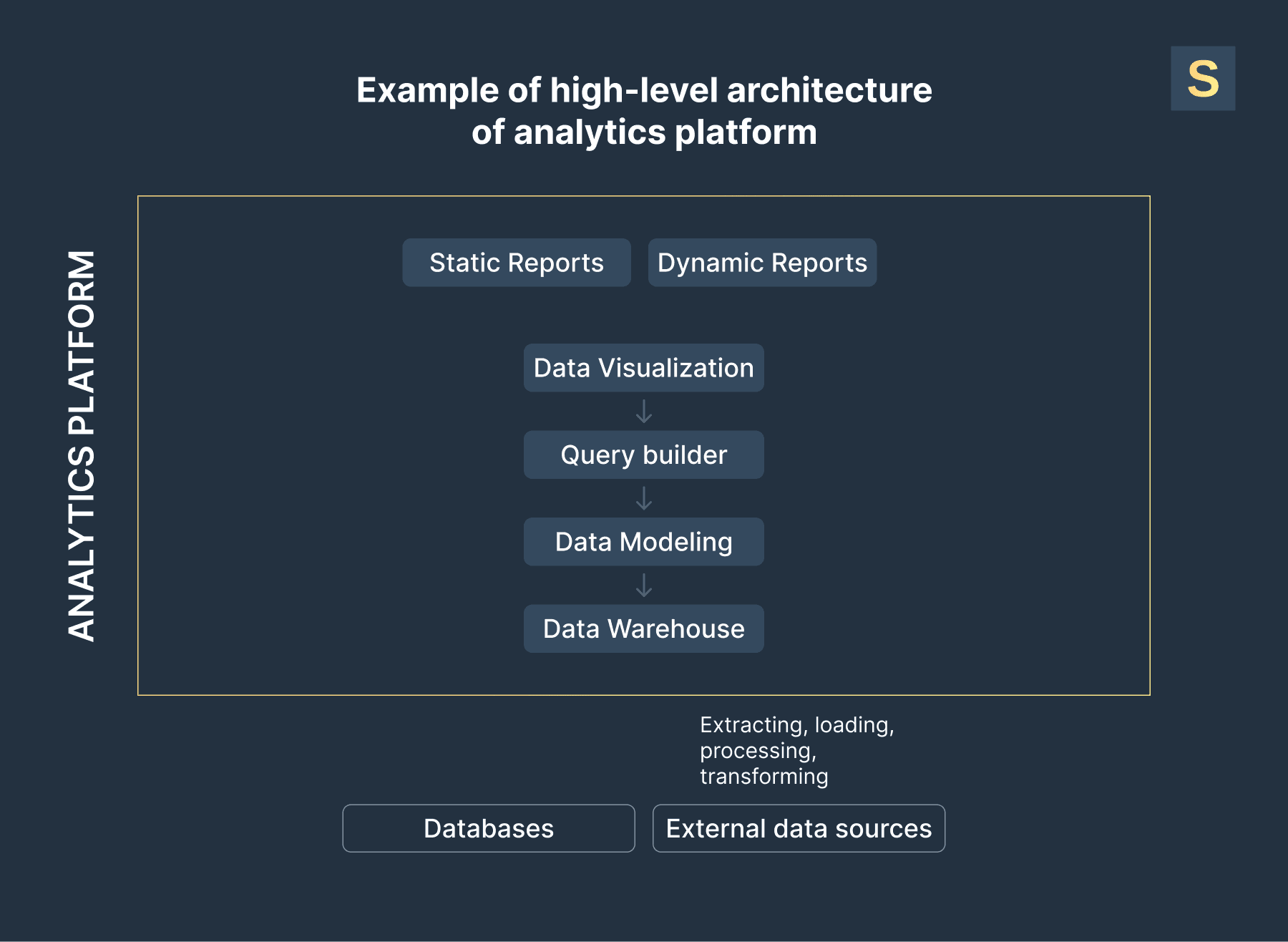
Multi-tenancy is the most crucial decision if you build a SaaS platform. You need to provide a secure, isolated environment for each customer while efficiently sharing infrastructure and resources. Tenant-aware data models and query filters will help you ensure that every piece of data and every query is automatically scoped to the correct customer.
Pro Tip: Adopting modular architecture is a great way to enable each layer to scale independently without breaking the platform. At the same time, you shouldn’t start with a complex architecture for MVP.
Build the simplest architecture that can reliably deliver value to your first customers. It can include centralized storage and a single analytics engine. In the early stages, flexibility should be your priority as your platform may require changes after user validation.
Read also: How to Build Scalable Multi-Tenant SaaS Architectures
Step 3: Tech Stack Selection
The choice of technologies for your projects depends on your functional requirements, data volume, performance expectations, and scalability needs. You should also consider team expertise and long-term maintainability as the selected stack must adapt as your platform grows.
Python is the most common option for tasks related to data processing. It’s most popular for ETL/ELT, API integrations, scripting, and orchestration. Also, SQL is a core language for transformations in data warehouses and analytics engines.
Node.js will be a good choice for back-end development, as this technology offers high concurrency for API endpoints, making it well-suited for serving dashboards. For the front-end, TypeScript with React is a standard choice.
Popular data storage options include AWS S3, Google Cloud Storage, Snowflake, or Databricks.
Pro Tip: It’s wise to choose well-established, widely adopted technologies. They reduce time-to-market and minimize the risk of vendor or ecosystem lock-in.
Step 4: Data Integration, Modeling, and Transformation
Once the backbone of the platform is in place, the next step is to integrate data from selected sources. This includes checking for errors, missing values, or duplicates. To streamline this process, you can use specialized tools available on the market, so your team doesn’t need to build every connection or pipeline from scratch. Examples include Fivetran, Airbyte, dbt, Airflow, and similar solutions.
Raw data is often messy and inconsistent, so it must be cleaned, standardized, and organized to make it analytics-ready. This process should be performed in small, modular steps. All changes should be carefully tracked, so you can roll back if necessary to ensure data reliability.
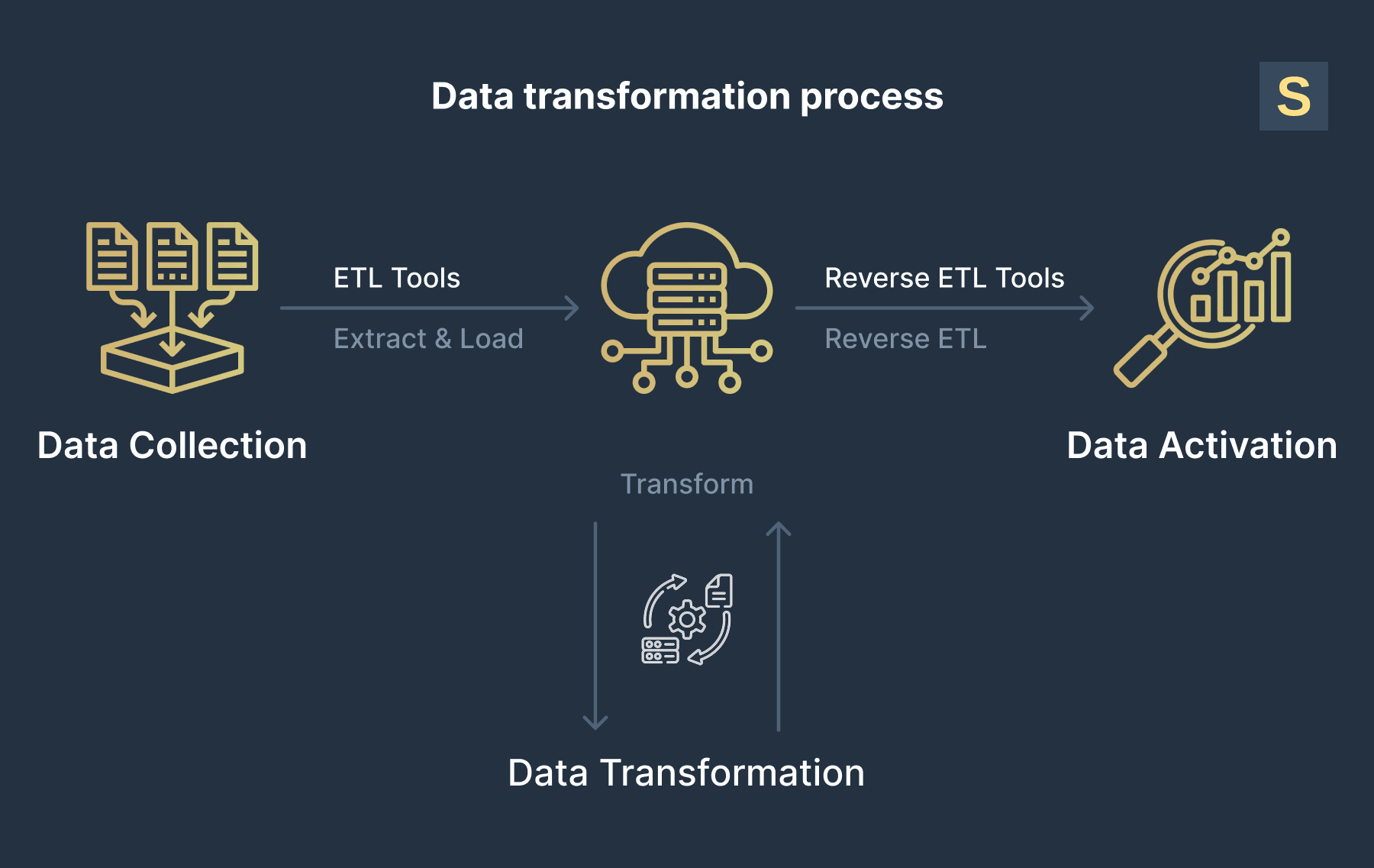
Next, you need to establish a central metrics system, which defines and stores key business metrics consistently. This guarantees that every dashboard and report in your platform uses the same definitions, providing users with trustworthy insights.
Step 5: Data Visualization
Data visualizations should be tailored to the context. Dynamic dashboards highlight real-time changes and allow interactive exploration, while static reports summarize historical data. It impacts design solutions, as dynamic and static data require different approaches to layout, interaction, and visual hierarchy.
UX/UI designers at Seedium follow industry best practices to craft interfaces that look clear and simple for users. Here are some pro tips:
- Role-based dashboards: Tailor views for different user roles to let them see the metrics and tools they actually need.
- Consistent navigation: Keep menus, filters, and actions consistent across pages to reduce learning time.
- Interactive elements: Use drill-downs, filters, and tooltips so users can explore data without leaving the dashboard.
“The design of your analytics platform plays a critical role in user adoption. Large volumes of data must be presented in a clear, intuitive, and actionable manner to ensure users can extract meaningful insights and perceive real value.”
Mariana Derevianko, UX/UI Designer
Step 6: Testing and Quality Assurance
You should never neglect testing. In our projects, we implement automated tests throughout the development process. This allows us to detect and address issues early and maintain high-quality standards across the platform.
Before launching, it’s essential to conduct unit and integration tests to validate data pipelines, transformations, and APIs. Additionally, load and performance testing ensures the system can handle the expected number of users while maintaining responsiveness and reliability.
Step 7: Deployment
Cloud deployment is the fastest and most common option for SaaS projects. Providers such as AWS, Google Cloud, or Azure offer high availability, security features, and automated scaling. This allows platforms to grow with user demand without the need for extensive infrastructure management.
However, you can also opt for a hybrid cloud approach. It combines cloud services with on-premises infrastructure. It’s a good choice when organizations need to keep sensitive data on-premises for compliance or regulatory reasons.
Read also: Hybrid Cloud vs. Multi-Cloud: Which Strategy is Right for Your Business?
Case study: Healthcare Data Analytics Platform Development
It's good to see real-life examples when we want to figure out how to build a data analytics platform. Let’s dive into the healthcare data analytics platform development case we have in Seedium’s portfolio.
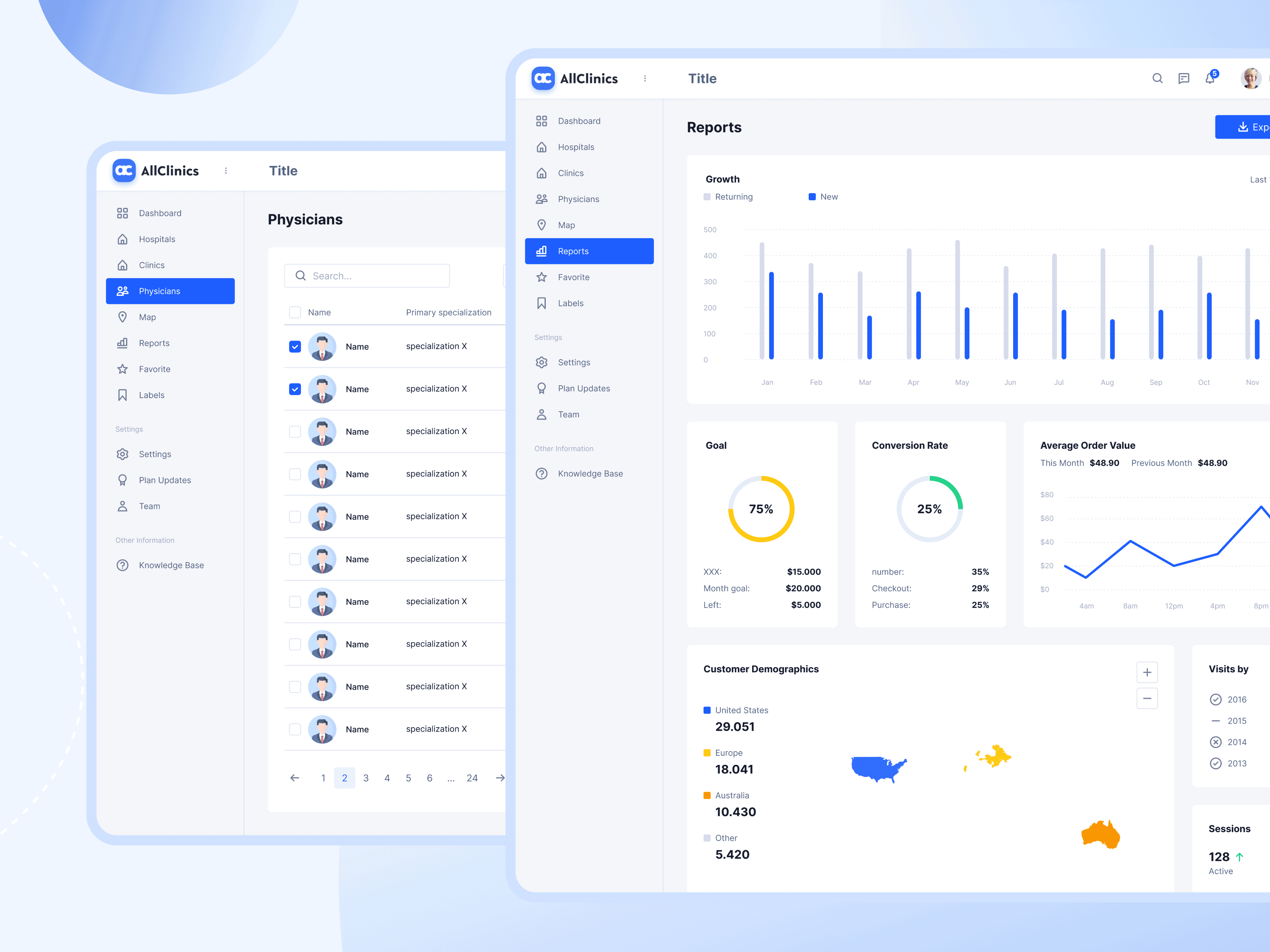
AllClinics was set to fix a lack of transparency in medical service costs. The project goal was to develop an advanced data analytics platform that would serve as a centralized market intelligence hub, aggregating data from every licensed medical organization in the U.S.
The team confronted significant problems that were typical of the projects involving building large-scale analytics platforms:
- Data volume & variety. We needed to gather data from multiple sources, provided in different formats (CSV, XML, JSON), and sometimes the files were more than one gigabyte in size.
- Performance bottlenecks. Processing 31.7 million procedures and monitoring 5,500 hospitals required a data analytics architecture that wouldn't break under load.
- Memory management. Early attempts to process these large files caused memory overflows, threatening the stability of the system.
Seedium put together a tailored plan that was just right for a modern data platform strategy:
- Ingestion with asynchronous Python. To fix the memory problem, we adopted Python's asynchronous processing and streaming features. Rather than doing a 10GB file load in RAM in one go, the system streamed it line-by-line, so the memory utilized at any time was very minimal.
- Scalable storage. We turned to Google BigQuery to build a data warehouse. Because BigQuery is serverless, AllClinics was able to bring in very large datasets without having to worry about how to set up their servers.
- Containerized orchestration. We containerized the whole app with Docker and used Kubernetes to manage it. So, if a service fails, it can be automatically restarted without the platform being taken down.
- Interactive front-end. Seedium developed a highly interactive React application that acted as the presentation layer. Instantly, users could filter millions of rows of hospital data by region, procedure, or insurance plan through this tool.
“AllClinics is proof that it’s possible to elegantly solve complex data problems with the right architecture and data engineering solutions. Today, it successfully consolidates data on 5,500 hospitals and 466 insurance companies.”
Mykola Stepanchenko, Data Engineer
Read the full AllClinics case study here.
Challenges and Best Practices for Building a Data Analytics Platform
An analytics platform infrastructure is a complicated one. So you should understand the common pitfalls, along with the ways of avoiding them.
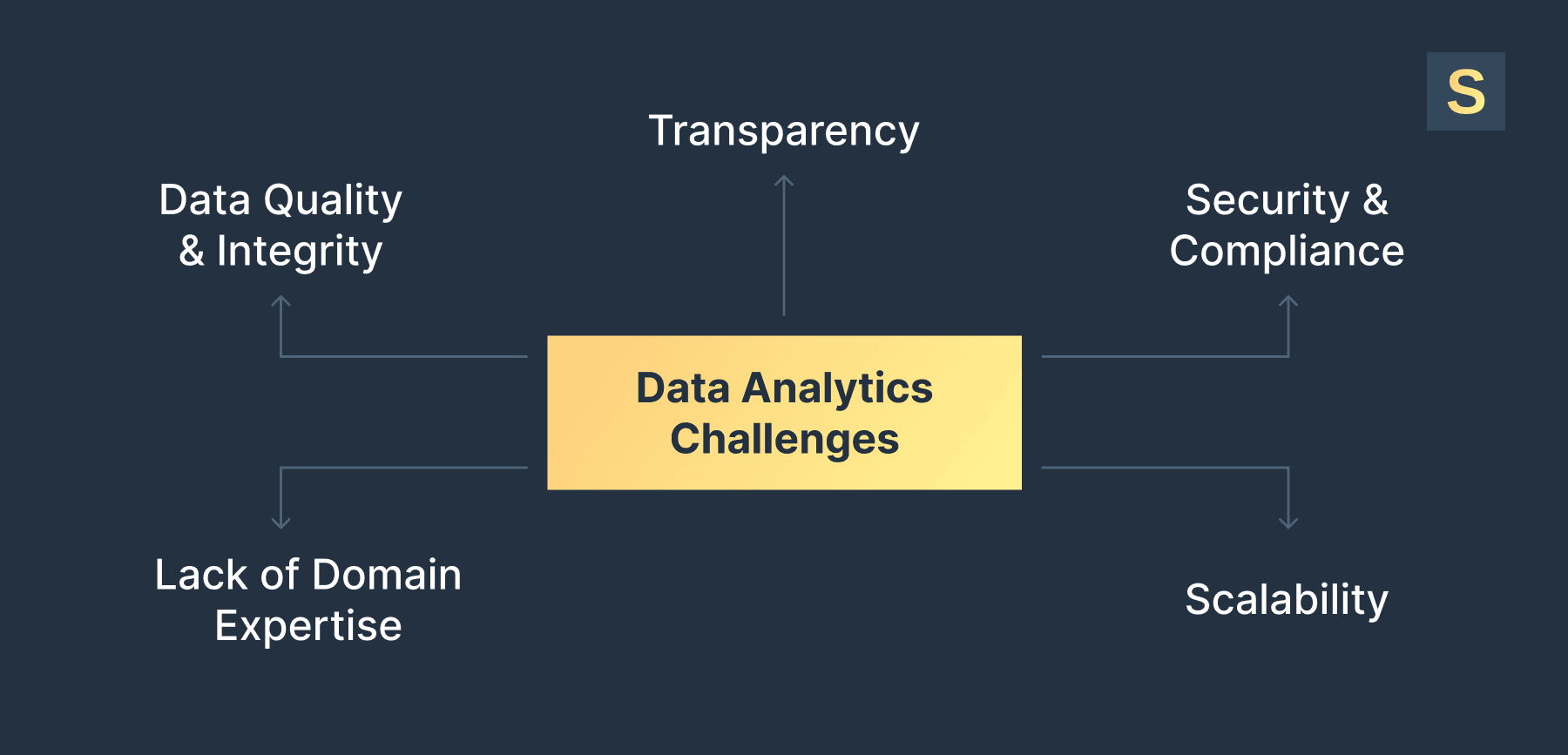
Challenge 1: Data Quality and Integration
In analytics platforms, data usually comes from multiple sources and often in different formats. This can lead to inaccurate analytical results. Decisions based on flawed data can damage business outcomes.
To prevent this from happening, you should adopt standardized data formats and APIs. Implement automated validation and use a robust ETL/ELT pipeline with schema mapping and data normalization.
Challenge 2: Transparency
When you build an advanced data analytics platform, the logic behind it may become less clear. This is especially the case when you integrate AI models. Users get insights, but they don’t understand how it was derived.
Make sure to implement explainability mechanisms to solve trust issues. This can include interactive dashboards that show how inputs affect outputs, textual explanations of predictions, and detailed documentation of algorithms and data sources.
Challenge 3: Security and Compliance
Complying with security and regulatory frameworks can be hard, especially in highly-regulated industries such as healthcare. Make sure to work with engineers who understand the specifics of your domain and have hands-on experience reflecting them in technical solutions.
Regardless of the industry, make sure to apply basic security mechanisms such as encryption, role-based access, auditing, and data anonymization/pseudonymization. This will help you reduce the risk of breaches and build trust with clients and stakeholders.
Challenge 4: Scalability
Processing large volumes of data demands significant computing power, and as data continues to grow, queries can slow down, and costs can rise. That’s why you should plan for scalability in advance.
Scaling computing resources independently for data processing and query execution will help you avoid overpaying for idle compute and improve performance under load. You should also cache frequently accessed datasets and queries.
Challenge 5: Lack of Domain Expertise
Hiring a senior data engineer can be expensive, and not every company can justify the overhead. Outsourcing software development offers a smart alternative. By partnering with an experienced external team, you gain access to proven industry talent without the long-term costs of full-time employment.
At Seedium, we provide both end-to-end development and team augmentation services to meet your needs. You can entrust the development of your platform to us or engage our experts to bridge skill gaps in your in-house team.
Work with Seedium to Build Your Analytics Platform
Seedium has the web development expertise that spans years in the area of creating software solutions for analytics. They are scalable, secure, and also customized to meet particular business goals.
Besides coding, we help you figure out your data platform strategy and come up with a data analytics architecture that will be compatible with your future growth. We are the experts in how to build a data analytics platform that produces a real return on your investment from the first line of code to the last interactive dashboard.
Go ahead and contact us to start your project with Seedium.


