


- The key tech startup trends include vibe coding, AI agents, data as a revenue stream, vertical solutions, hiring dedicated teams for product development, and an increased focus on AI ethics and security.
- The development of the startup market is primarily focused on industry-specific and AI-related solutions, driven by user demand and investment trends.
- AI has a significant impact on startup technology trends, influencing the full product lifecycle, from development to user engagement and customer support.
In more than 10 years in business and software development, I have been involved in the creation of over 100 startups as a founder, partner, or engineering services provider. One thing I have learned is that understanding the business and tech landscape you’re working in is crucial to your success.
In this article, my team and I have gathered the top tech startup trends to help business leaders keep up with the latest developments and innovations, shaping the startup ecosystem.
Key Startup Industry Trends: Market Overview 2026
The startup market dynamics shift toward a more strategic, sector-focused, and globally distributed ecosystem. Investors are becoming more selective and choosing startups that can show clear product-market fit and well-defined business models. Operational efficiency, intelligent automation, and ESG alignment now play a key role in shaping which startups thrive.
According to BestBrokers research, in 2025, AI-related startups raised 52.7% of global venture capital funding. This year, this trend is expected to accelerate further. Other popular directions include FinTech, HealthTech, ClimateTech, and Defense.
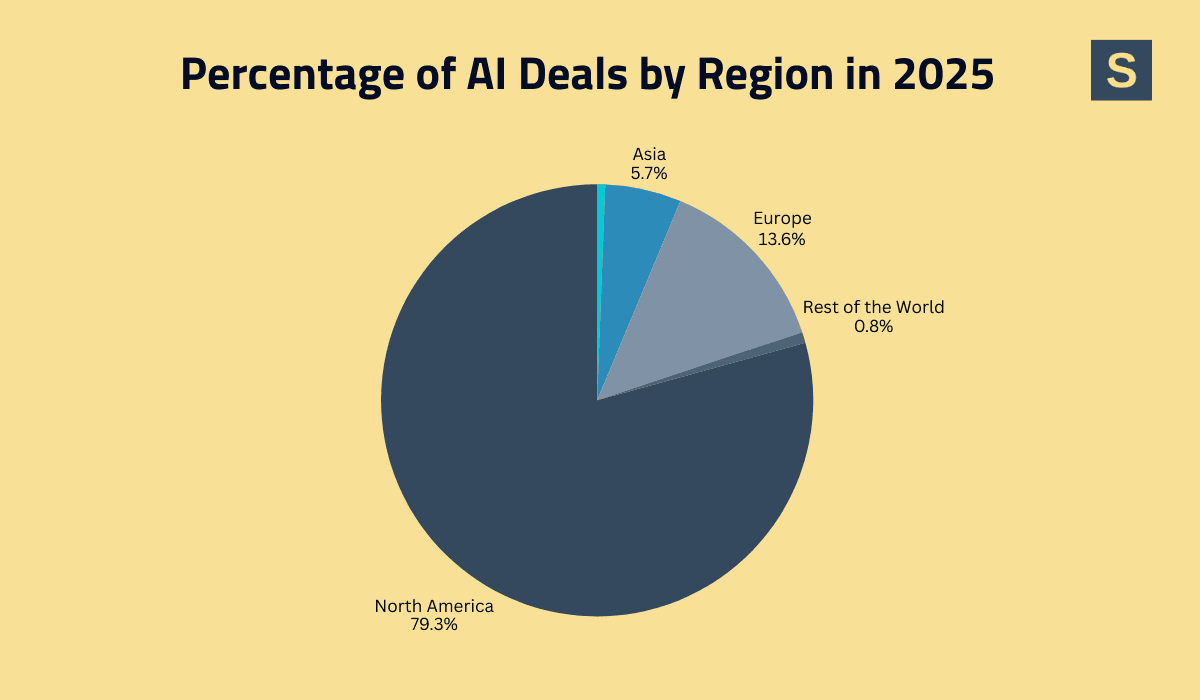 Although the startup ecosystem is increasingly expanding into local and regional markets, North America remains the primary global hub.
7 Technology Trends for Startups and How to Apply Them
Key technology trends shaping startups include vibe-coding, AI agents, monetizing data as a revenue stream, industry-specific solutions, dedicated teams to tackle talent gaps, AI ethics and explainability, and strengthened cybersecurity. Let’s talk about each of these trends and ways to adopt them in your business strategy.
1. Vibe Coding Enables Faster Time-to-Market
The rise of vibe coding has created an environment where startups can build PoCs and MVPs without large teams or significant investments. Today, even solo founders can quickly create a prototype using AI to test their ideas or attract investors. This significantly speeds up the product lifecycle as you can gather feedback faster, adapt more effectively, and release market-ready solutions in less time than traditionally.
In 2025, Y Combinator Managing Partner Jared Friedman and CEO Harry Tan reported that approximately 25% (one in four) of the Winter 2025 startups have 95% AI-generated codebases. However, they also noted that for the most part, these startups were built by tech-savvy founders who have a clear understanding of which parts of development can be automated using AI.
While vibe coding is a great way to kick off startup product development, it’s crucial to understand the limitations of this approach. Vibe-coding tools are prone to producing poorly structured code, unclear architecture, and security vulnerabilities. As a result, you may end up with an app that works in the beginning, but is difficult to scale and maintain in the long run. That’s why engaging experienced software developers is essential to secure and stabilize your vibe-coded application.
Case study: Scaling a vibe-coded SaaS application
At Seedium, we help early-stage startups scale their vibe-coded apps into market-ready products. We use a smart approach to ensure you get the maximum value from your initial investments without needing to build everything from scratch. Our engineers begin by analyzing your system and prioritizing key modules for improvement. Here is an example of a project we worked on.
The client contacted us to stabilize a vibe-coded AI management platform. It was initially built with no-code tools and, over time, began experiencing significant output delays that disrupted workflows. The platform accumulated substantial technical debt due to a lack of coding standards.
After a system audit, we implemented the following solutions to secure the platform:
- Refactored the codebase and reduced technical debt by 30% within the first 1.5 months.
- Implemented coding standards to simplify development and maintenance.
- Optimized the architecture to improve performance.
- Balanced workloads to ensure no single component became a bottleneck.
- Restructured the back end for greater stability.
- Implemented new features and integrations.
As a result, the platform became more stable and scalable, allowing the client to develop new features without breaking the system or causing delays. Users shared encouraging feedback. They recognize the platform’s strong potential and look forward to upcoming updates.
Read the full case study: Scaling a Vibe-Coded SaaS Application
How to apply this trend in your strategy
Use vibe coding tools to test new concepts and features. Build proofs-of-concept to pitch to investors and gather early customer insights. The key is to use vibe coding to validate and refine ideas before committing significant resources to full-scale development.
2. AI Agents Automate Complex Workflows
According to MarketsandMarkets, the AI agent market is expected to expand more than sixfold between 2025 and 2030. The rapid development and accessibility of agentic AI has made it an affordable tool not only for enterprises but also for startups.
Early-stage businesses actively use AI coding assistants such as Cursor or GitHub Copilot to speed up product development workflows. With the right settings, such tools can effectively handle repetitive tasks, including generating boilerplate code, writing unit tests, formatting code, creating templates, and integrating standard APIs.
Our latest State of SaaS Report found that more than half of professional developers use AI coding assistants daily in their jobs.
Mature startups rely on AI agents to automate routine internal tasks such as data entry, email response, scheduling, and report generation. Using such tools helps small teams scale operations without significant investment.
Unlike AI-based chatbots, AI agents can perform multi-step tasks. For example, they can handle new user onboarding by verifying accounts, guiding setup, sending personalized tutorials, collecting feedback, and generating analytics. This allows startups to compete with larger companies without adding headcount.
How to apply this trend in your strategy
Define what repetitive tasks in your workflow can be automated without compromising quality. The truth is that you’ll still need to engage human experts at some point to review AI outcomes, guide models, or solve complex requests. So, focus on striking the right balance.
Start with automating one task and move forward only after validating success criteria such as accuracy, timeliness, and error-free execution.
3. Data Drives New Revenue Streams
In the age of AI, high-quality data is more valuable than gold. Companies need clean, well-organized datasets to implement AI and machine learning effectively, yet many struggle with in-house data management. According to Salesforce, 62% of tech industry leaders cite disconnected data sources as one of their top business challenges.
This shift has led companies to recognize data as a valuable asset capable of generating direct or indirect income, giving rise to Data-as-a-Service (DaaS) as one of the latest tech startup trends. DaaS provides organizations with ready-to-use, curated datasets delivered via APIs or cloud platforms.
Synthetic data is an emerging driver within this trend, especially for tech startups. By generating artificial yet realistic datasets, startups can train AI models, test products, and simulate different scenarios. This not only accelerates product development but also opens new revenue opportunities, such as providing high-quality synthetic datasets to other companies.
According to Grand View Research, the global DaaS market is expected to grow at a CAGR of 28.1% from 2024 to 2030.
How to apply this trend in your strategy
You can use a DaaS platform to power your AI initiatives or monetize your datasets, provided they are clean, well-organized, and properly governed. Another way is building analytics platforms that deliver actionable insights and decision support to other businesses.
4. Vertical Solutions Address Specific Industry Challenges
The trend toward vertical solutions is gaining strength, driven by growing demand for industry-specific tools, regulatory complexity, and the need for tailored workflows that generic software can’t address.
Founders of vertical SaaS products often come from the industries they serve. This means they have unique insights that enable them to create more effective and targeted products. Using vibe coding, they can rapidly prototype and iterate on these solutions, competing with established teams.
AI makes verticalization even more attractive. Investors see AI-powered vertical solutions as differentiated and defensible because of the combination of domain expertise and smart automation. These applications are more likely to achieve product-market fit and scale efficiently within their niche.
Case study: Building a communications platform for real estate investors
At Seedium, we help businesses build both horizontal and vertical solutions. With commercial experience across 15+ industries, our engineers apply their deep technical expertise and industry-specific insights to design scalable, reliable, and innovative software solutions.
For example, several years ago, we helped the client rebuild their communication platform. The main goal was to turn the beta version into a stable, full-scale application, avoiding any system disruptions during the modernization process.
Solutions we provided:
- Implemented microservice architecture to improve scalability.
- Performed code refactoring and migrated from JavaScript to TypeScript to improve product stability and simplify long-term support.
- Provided security improvements.
- Set up CI/CD for faster and more stable feature delivery.
As a result, feature development became ~10-15% faster. The platform became more stable and scalable and successfully serves over 10,000 businesses worldwide.
Read the full case study: Building a Communications Platform for Real Estate
How to apply this trend in your strategy
If you’re an early-stage startup, make sure your product idea addresses a real, specific problem for your target audience. Engage with industry leaders to identify gaps and validate your concept, ensuring your solution delivers tangible value.
For more mature startups, the focus shifts to scaling within specific industries by building tailored features, workflows, and integrations that meet the unique needs of their niche markets.
5. Dedicated Teams Solve Hiring Problems
Even with AI tools, talent shortage remains a significant problem for startups with limited budgets and evolving project scopes. Dedicated development teams and team augmentation services give early-stage businesses access to experienced software experts without the need for long-term hiring.
According to Deloitte, 76% of IT work in organizations is delivered by external providers, with cost reduction cited as the primary driver. Global talent and project-based collaboration significantly lower the expense of hiring software engineers while providing access to a broader pool of expertise.
Another reason dedicated teams are becoming a growing trend for startups is scalability. Startups can scale teams up or down depending on project needs, paying only for work done.
How to apply this trend in your strategy
Dedicated teams should be used strategically based on your project’s needs. If you have in-house tech leadership and need additional resources to accelerate development, team augmentation is the ideal solution. If you’re looking for an experienced team to take full responsibility for your product development, outsourcing is the better choice.
At Seedium, we offer both options for startups. Whether you need a single engineer or a full cross-functional dedicated development team, we can quickly allocate the right specialists from our in-house talent pool to match your requirements.
6. AI Ethics & Explainability Come to the Fore
The global regulatory landscape is shifting towards stricter and more mandatory oversight of artificial intelligence solutions. The EU Artificial Intelligence Act introduces requirements for risk prevention and human oversight of high-risk systems. In the United States, state initiatives such as the Colorado Artificial Intelligence Act and the Texas Responsible AI Governance Act further emphasize risk assessments, transparency, and restrictions on harmful AI uses.
Black-box AI solutions are increasingly viewed as too risky for modern decision-making, particularly in regulated sectors such as Healthcare, FinTech, and Manufacturing. Organizations are expected to ensure transparency and accountability so users can understand the factors driving model outcomes. Ethical concerns surrounding AI include bias and discrimination, misinformation, copyright and intellectual property risks, deepfakes, privacy violations, and broader societal harm. As a result, AI ethics is shifting from theory to operational controls not only for enterprises but also for startups.
How to apply this trend in your strategy
Whether you build custom models or integrate AI into your app, make sure your systems provide clear decision logic. Include bias testing, model documentation, audit trails, and mechanisms for explainability in your pipeline to ensure you meet user expectations and comply with regulations.
7. Cybersecurity Becomes Mission-Critical from Day One
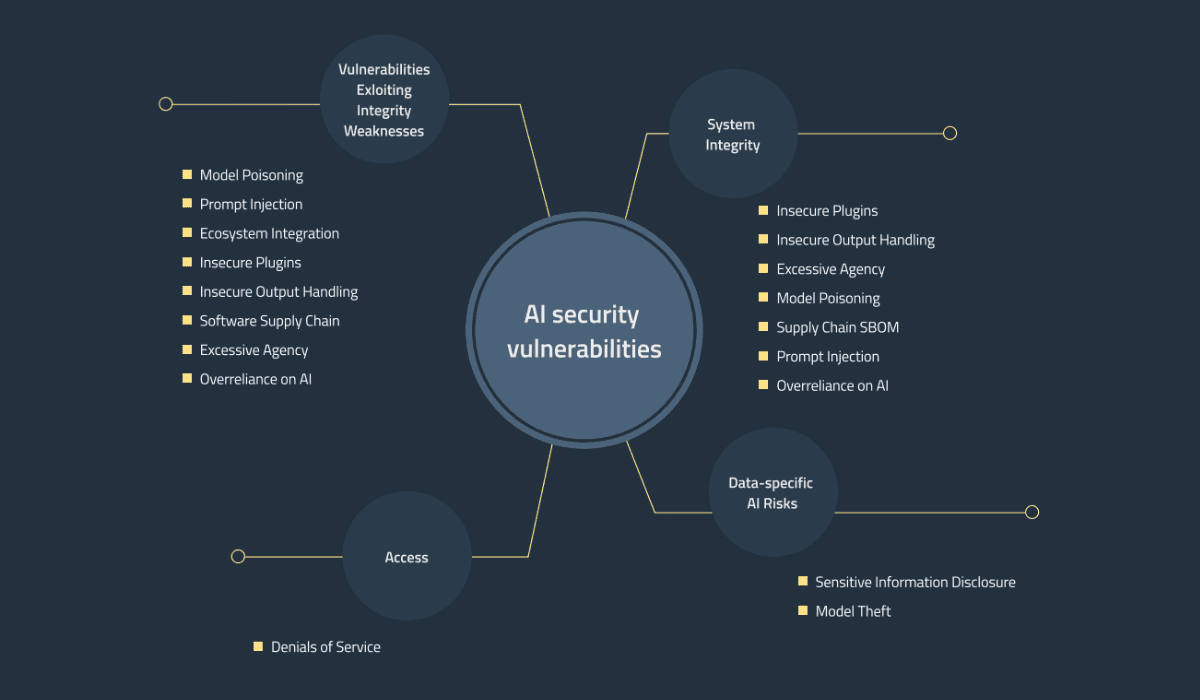
Following previous startup trends, the increased focus on security reflects growing awareness of the risks posed by data breaches, model manipulation, and adversarial attacks. Startups and established companies alike are now embedding security measures throughout the AI lifecycle, from data collection and model training to deployment and monitoring.
AI plays a dual role in security. It can serve as an advanced protection mechanism while simultaneously introducing new security threats. On one hand, AI enhances cybersecurity through intelligent threat detection, anomaly monitoring, and automated response systems. On the other hand, the same technology can be exploited for sophisticated attacks.
How to apply this trend in your strategy
Prioritize your system security from day one. This includes privacy-preserving techniques, robust access controls, and continuous threat assessment. Such mechanisms will help you reduce vulnerabilities, protect user trust, and ensure compliance with evolving regulatory standards.
Successfully Adopt Tech Startup Trends with Seedium
When it comes to implementing startup trends, the first step is figuring out which ones actually make sense for your business and are worth adopting. The right technology partner plays a significant role in this process.
Since 2017, Seedium has helped startups across the EU, USA, UK, Australia, and New Zealand build, launch, and scale digital products. With roots in the startup ecosystem, we understand the unique challenges and constraints early-stage businesses face and provide tailored solutions to address them. We’re proud that 80% of the startups we’ve worked with continue to thrive in the market today.
Feel free to check out our software development services for startups and contact us using the form below if you need assistance in your product development.


